EcoSafe®
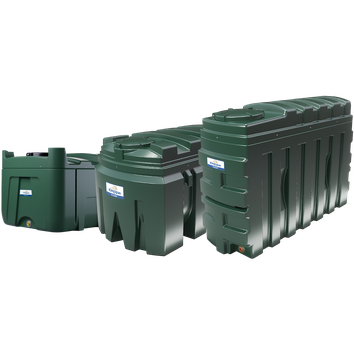
The EcoSafe range of oil tanks has been specifically designed and built to provide responsibly safe and secure heating oil storage.


Titan Oil Storage
Find out more about Kingspan oil storage tanks including help, advice and FAQ's.
Oil tanks must always be installed by a competent technician or preferably an OFTEC approved installer.
Before installing your new oil tank, consider the following points: the location of your tank, a level and solid foundation, and accessibility for the delivery driver to fill it up. It is important to follow correct installation steps to maintain tank warranty. If you are replacing an old tank, you should also think about removal and disposal in an environmentally friendly way.
Oil theft from your tank can be avoided with simple steps to discourage would-be thieves. Try to keep your tank hidden if possible, apply locks to all caps and vents and attach an oil alarm. With the Kingspan Watchman Alarm, you will receive an instant notification if the oil level in your tank suddenly drops. The Watchman Alarm fits all Kingspan oil tanks.
It is important to consider the base and support for your oil tank. It’s advised that the base should be:
The tank itself can be weakened over time leading to leakages if it is not supported correctly. Ground conditions over time may also change and it is important to ensure the structural support remains in its original condition.
Regular maintenance of your domestic oil tank should be carried out, including visual inspections looking for rust, damage and cracks, and that the mechanisms and tank gauges are working correctly – check out our Tank Health Check for more information. If anything doesn’t look right, a professional should be contacted to offer a secondary inspection. Regardless, we recommend that you get your oil tank serviced by one of our OFTEC certified installers once a year. Oil tanks should be cleaned out every 3-5 years, depending on household size and tank use.
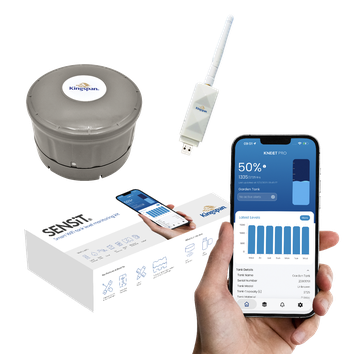
With our Watchman products, monitoring your tank level has never been easier. All EcoSafe tanks are equipped with a Watchman Alarm tank pack, which enables you to check your oil level remotely as the information is wirelessly transmitted to the receiver. To prevent thefts, it also activates an alarm if there is a sudden drop of oil. This reliable measurement and control pack will help you to keep a constant check on oil levels 24/7.
Find out more about our Smart Monitoring Products here.
Oil Tank Advice from OFTEC & UKIFDA (previously known as FPS)
Straightforward advice on caring for your oil tank and knowing when it needs to be replaced. Especially important for single skin tanks that are more than 10 years old because, like any domestic appliance, oil tanks will eventually wear out.
We have simplified some of the technical terms associated with oil tank installation and oil tank storage to help you understand what’s required when it comes to replacing your oil tank.
Our installation service is provided to you by an expert team of highly qualified, highly trained OFTEC registered engineers. While we don’t provide this service directly ourselves, we do ensure we only liaise with trusted partners, that offer an extensive range of both bunded plastic and steel oil tanks suitable for all homes and businesses. We will ensure you find the oil tank that is right for you and with the help of our team of engineers, they will carry out the installation in line with all the latest guidelines and regulation.
Call us today to find out more +44 (0) 28 38364675
Vent Cap: A ventilation device to regulate the pressure inside the tank.
Single skin oil tank: The most basic form of oil tank comprising a steel or plastic wall which contains the oil.
Bund: A secondary containment designed to house 110% of the brim-full volume of the inner tank. The bund prevents pollution in the event of an oil leak or spillage.
2” BSP Offset fill: A filling port located on the tank with a 2” British Standard Pipe (BSP) male thread.
BS EN 590: Requirements and test methods for Diesel Automotive Fuels.
Spillstop - overfill device: Mechanical device that prevents the tank from being overfilled.
1” BSP female bottom outlet: Outlet port on the bottom of the tank, with a 1” British Standard Pipe (BSP) female thread.
Top Outlet: Connection port located on the top of the tank that is used to dispense the contents.
BS EN 2869: Specification for Fuel oils for agricultural, domestic and industrial engines and boilers.
ntegrally bunded tank: This is the description of the assembled bund and inner tank. A factory-produced oil storage tank comprising of a single skin tank enclosed in an outer bund. Integrally bunded tanks also have fitted lids to stop debris and rain water entering the bund area.
Gate Valve: Valve with filter bowl, used to cut off the flow if required, located on the bottom outlet.
BS EN 14214: Requirements and test methods for Automotive fuels (Fatty acid methyl ester FAME, for Diesel engines).
For more information on how we can help you with your project, get in touch with us